Korean Bibimbap
Highlighted under: Cultural Favorites
Korean Bibimbap is a vibrant and healthy dish that combines a variety of fresh vegetables, rice, and a flavorful sauce. Perfect for any meal!
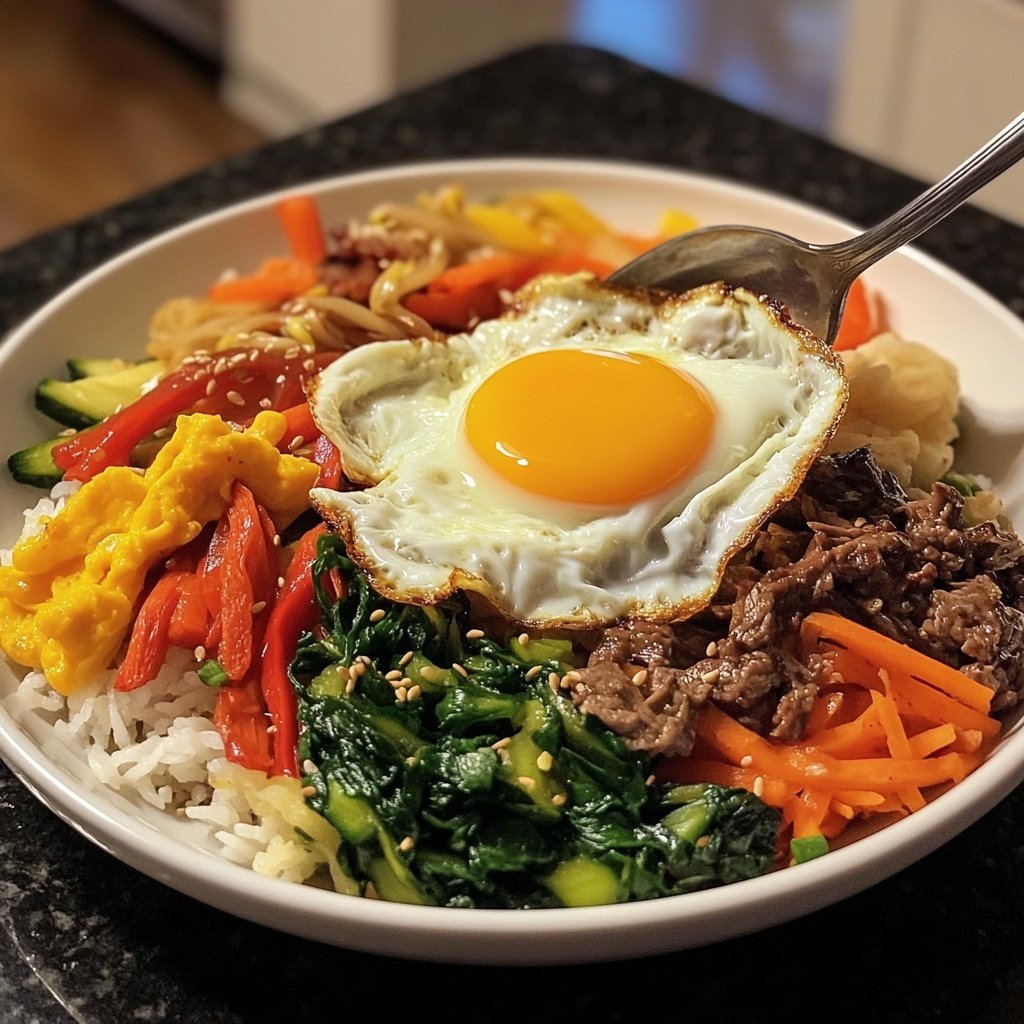
Discover the rich flavors of Korea with this classic Bibimbap. A bowl of goodness that brings together rice, sautéed vegetables, and a fried egg, topped with spicy gochujang sauce. Each bite offers a delightful mix of textures and tastes!
Why You'll Love This Recipe
- A colorful and nutritious meal that's fun to assemble
- Versatile with endless topping options to suit your taste
- Deliciously satisfying and packed with flavor
The Heart of Bibimbap
Bibimbap, which translates to 'mixed rice,' is a beloved Korean dish known for its vibrant colors and diverse flavors. At its core, this dish is a harmonious blend of seasoned vegetables, rice, and protein, all topped with a fried egg and a spicy sauce. The beauty of bibimbap lies in its presentation, as each ingredient is carefully arranged to create a visually stunning meal that is as delightful to look at as it is to eat.
Each component of bibimbap is thoughtfully chosen not only for taste but also for nutritional value. The combination of fresh vegetables, protein, and carbohydrates makes this dish both satisfying and nourishing. By varying the vegetables and protein, you can easily adapt the recipe to meet your dietary preferences or use what's available in your kitchen.
Customizing Your Bibimbap
One of the best aspects of bibimbap is its versatility. You can customize it to suit your taste or dietary needs. For instance, if you're looking for a vegetarian option, simply omit the eggs or replace them with tofu. If you're a meat lover, consider adding bulgogi or grilled chicken for extra protein. The choice of vegetables can also vary; mushrooms, radishes, or bell peppers can add unique flavors and textures.
Seasoning preferences can also be adjusted. If you prefer a milder flavor, reduce the amount of gochujang in the sauce or substitute it with a sweet chili sauce. On the other hand, if you enjoy a spicy kick, feel free to add extra chili flakes or a drizzle of hot sesame oil.
Serving Suggestions
When serving bibimbap, presentation is key. Use bowls that showcase the colorful layers of ingredients. Consider serving the dish with a side of kimchi for an authentic touch and an additional layer of flavor. This fermented side dish complements the fresh ingredients of bibimbap beautifully and adds a probiotic boost to your meal.
For those looking to elevate their bibimbap experience, you can serve it with a sprinkle of toasted sesame seeds or a drizzle of sesame oil just before serving. This not only enhances the flavor but also adds a lovely aroma to the dish. Don't forget to provide your guests with a spoon or chopsticks for mixing everything together before enjoying this delightful meal.
Ingredients
For the Bibimbap
- 2 cups cooked white rice
- 1 cup spinach, blanched
- 1 carrot, julienned
- 1 zucchini, julienned
- 1 cup bean sprouts, blanched
- 2 eggs
- 1 tablespoon sesame oil
- Salt to taste
For the Sauce
- 2 tablespoons gochujang (Korean chili paste)
- 1 tablespoon sesame oil
- 1 tablespoon sugar
- 1 tablespoon water
- 1 teaspoon vinegar
Feel free to mix and match your favorite vegetables!
Instructions
Prepare the Rice
Cook the white rice according to package instructions and set aside.
Sauté the Vegetables
In a pan, heat sesame oil over medium heat. Sauté the carrots and zucchini until tender. Season with salt.
Fry the Eggs
In a separate pan, fry the eggs sunny-side up.
Make the Sauce
In a bowl, mix gochujang, sesame oil, sugar, water, and vinegar to create the sauce.
Assemble the Bibimbap
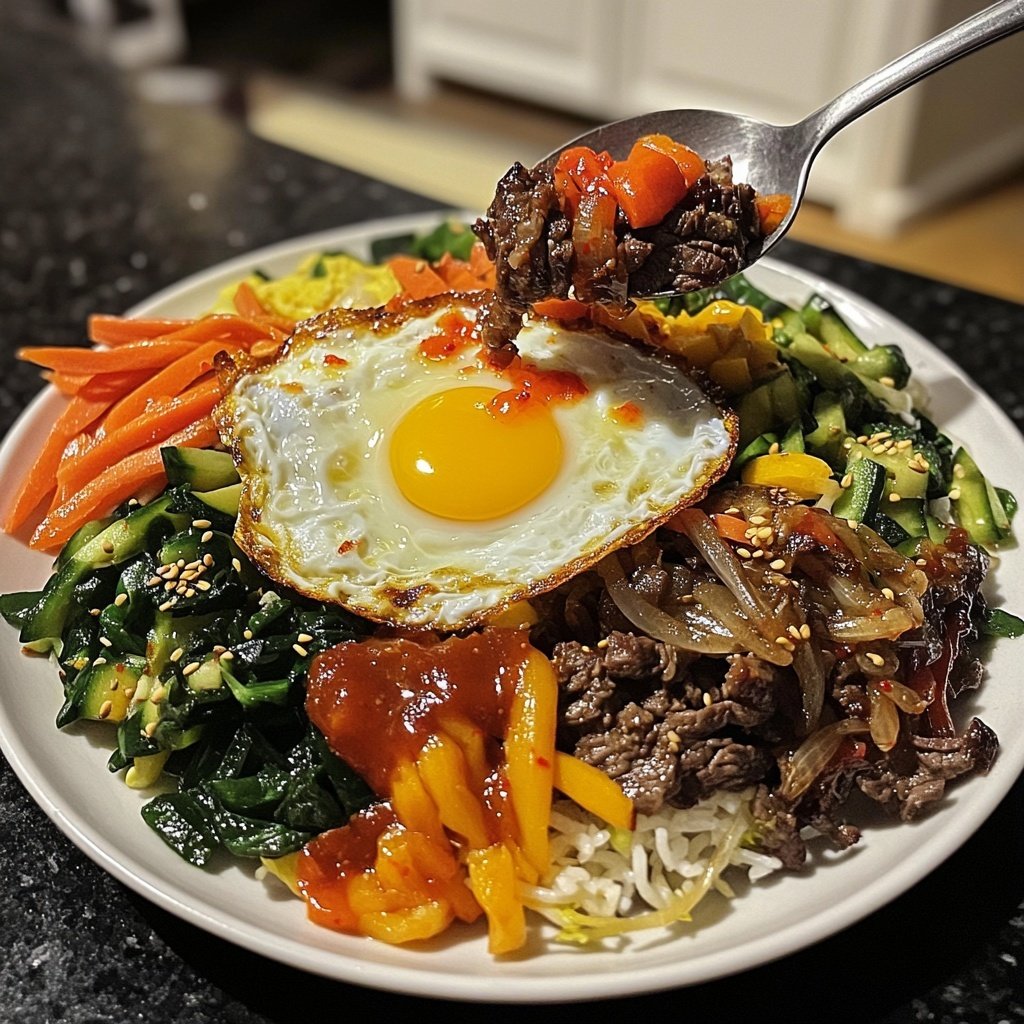
In a bowl, layer the cooked rice, sautéed vegetables, blanched spinach, and bean sprouts. Top with fried eggs and drizzle with sauce.
Mix everything together before eating for a burst of flavor!
Pro Tips
- For added flavor, sprinkle sesame seeds on top before serving.
Storing Leftovers
If you find yourself with leftover bibimbap, storing it properly is essential to maintain its flavor and texture. Store each component separately in airtight containers—this prevents the rice from becoming soggy and keeps the vegetables crisp. The cooked rice can be refrigerated for up to 4 days, while the vegetables and sauce can last for about a week.
When you're ready to enjoy your leftovers, simply reheat the rice and warm the vegetables in a pan or microwave. You can fry a fresh egg to top it off, ensuring your bibimbap retains its delicious appeal. Mixing everything together just before serving will help reincorporate the flavors.
Nutritional Benefits
Korean bibimbap is not just a feast for the eyes; it's also a powerhouse of nutrition. The variety of vegetables included in this dish provides essential vitamins and minerals. Spinach, for example, is rich in iron and vitamins A and C, while carrots offer beta-carotene for healthy skin and vision.
Additionally, the use of whole grains like brown rice can increase fiber content, promoting digestive health. The inclusion of protein from eggs or meat helps in muscle repair and growth, making bibimbap a balanced meal that fits into various dietary lifestyles.
Questions About Recipes
→ Can I use brown rice instead of white rice?
Yes, brown rice can be used for a healthier option, but it may change the cooking time.
→ What vegetables can I add?
You can add any vegetables you like such as mushrooms, radishes, or bell peppers.
→ Is Bibimbap vegetarian-friendly?
Yes, simply omit the egg or replace it with a plant-based alternative.
→ Can I prepare Bibimbap in advance?
Yes, you can prepare the ingredients ahead of time and assemble them just before serving.
Korean Bibimbap
Created by: India Rutherford
Recipe Type: Cultural Favorites
Skill Level: Intermediate
Final Quantity: 2 servings
What You'll Need
For the Bibimbap
- 2 cups cooked white rice
- 1 cup spinach, blanched
- 1 carrot, julienned
- 1 zucchini, julienned
- 1 cup bean sprouts, blanched
- 2 eggs
- 1 tablespoon sesame oil
- Salt to taste
For the Sauce
- 2 tablespoons gochujang (Korean chili paste)
- 1 tablespoon sesame oil
- 1 tablespoon sugar
- 1 tablespoon water
- 1 teaspoon vinegar
How-To Steps
Cook the white rice according to package instructions and set aside.
In a pan, heat sesame oil over medium heat. Sauté the carrots and zucchini until tender. Season with salt.
In a separate pan, fry the eggs sunny-side up.
In a bowl, mix gochujang, sesame oil, sugar, water, and vinegar to create the sauce.
In a bowl, layer the cooked rice, sautéed vegetables, blanched spinach, and bean sprouts. Top with fried eggs and drizzle with sauce.
Extra Tips
- For added flavor, sprinkle sesame seeds on top before serving.
Nutritional Breakdown (Per Serving)
- Calories: 500 kcal
- Total Fat: 18g
- Saturated Fat: 3g
- Cholesterol: 186mg
- Sodium: 600mg
- Total Carbohydrates: 70g
- Dietary Fiber: 4g
- Sugars: 6g
- Protein: 17g